

The Church of Saint Thomas of Villanova, commonly known as the Miagao Church, is the Roman Catholic parish church of the town of Miagao in Iloilo Province. Completed in 1797, the church is famous for the artistic sculptural relief carved on its facade. In 1993, the church was designated as one best examples of the Baroque Churches of the Philippines and included in the list of World Heritage Sites by UNESCO.
The Miagao Church stands as a living legacy of the culture and way of life of the people of Miagao centuries ago, anchored in a strong foundation of Christian faith. As most travelers would agree, the Miagao Church is one of the country’s architectural gems because of its unique and imposing designs, ornaments and motifs. - http://www.exploreiloilo.com/do/info/miagao-church/
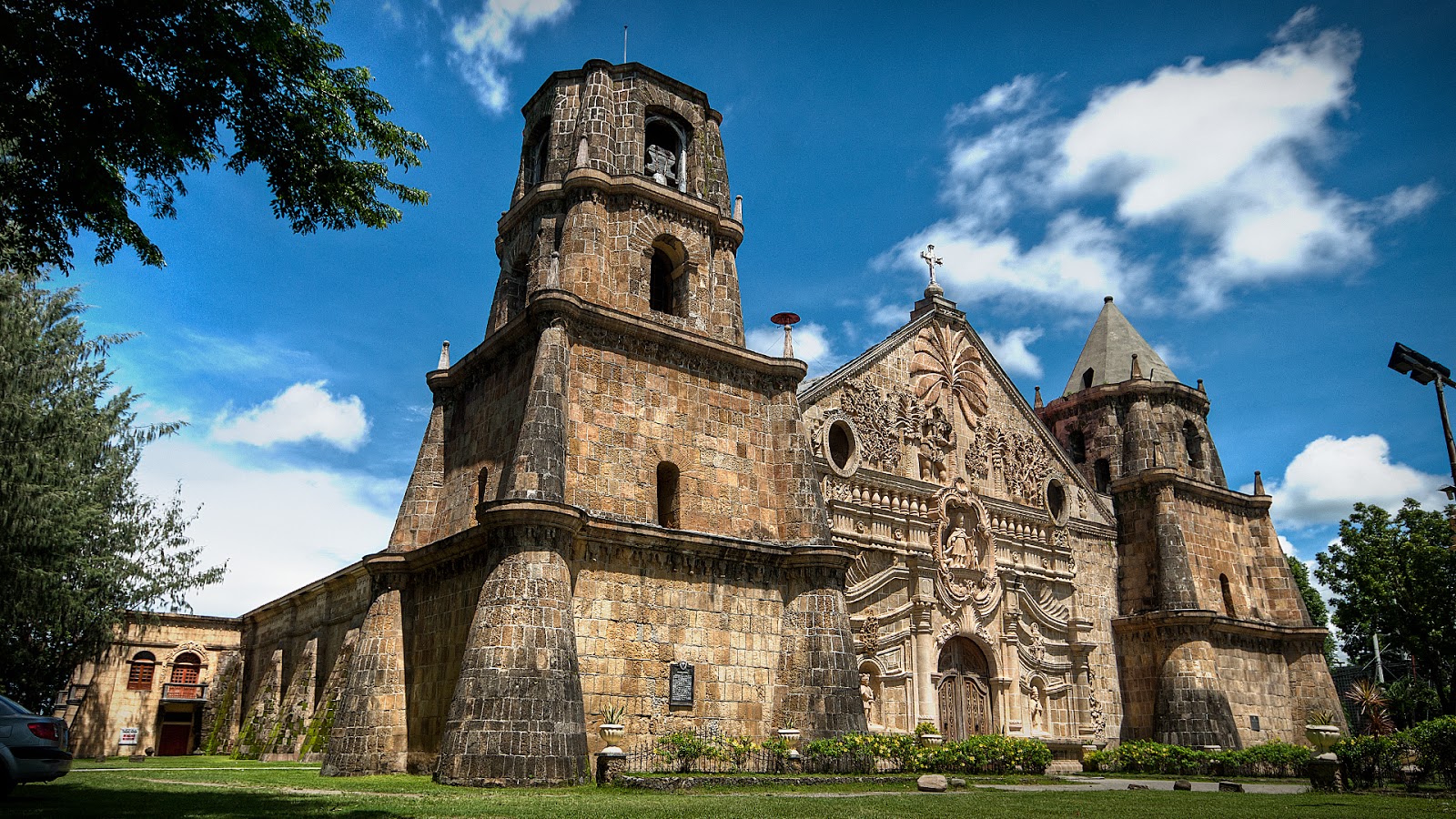
I can say that this church is one of the most beautiful I have seen so far. What made this church standout among the other Philippine churches is its facade with carvings of the Pope, St. Christopher carrying the child Jesus Christ on his shoulder, and some Philippine ensembles like coconut and papaya. According to history, the church served not only as a religious building or institution but also as a fortress against Muslim raiders. - http://www.mynomadichabits.com/2012/07/miagao-church-unesco-world-heritage.html

The Miag-ao Church was built in 1786 by Spanish Augustinian missionaries and was declared as part of the UNESCO World Heritage Site "Baroque Churches of the Philippines" in 1993. On the front facade, which is flanked by two watchtower belfries, one can see the unique blending of Spanish and native influences.
The central feature of the bas-relief facade is a large coconut tree which reaches almost to the apex. While an integral part of the Philippine landscape, the coconut tree is also the subject of lore. According to an old Philippine legend, the coconut tree was the only bequest from a loving mother to her two children, a tree which sustained them for life. On the church's facade the coconut tree appears as the "tree of life" to which St. Christopher carrying the Child Jesus on his shoulder is clinging to. The lesser facades feature the daily life of Miagaowanons during the time. Also depicted are other native flora and fauna, as well as native dress.
The church and its watchtowers were also built to defend the town and its people against raids by the Moros. It therefore has thick walls and, reportedly, secret passages. Indeed stretching along the Iloilo coast are defensive towers, but none that equal the size of the Miag-ao. It is because of this defensive purpose that it is sometimes referred to as the Miag-ao Fortress Church. - http://mayniladailyphoto.blogspot.com/


